artificial grass company
The right artificial grass company is defined less by the turf it sells and more by what happens under it: base depth, compaction, drainage, and seam work. Product warranties across the industry commonly run 8 to 15 years, but a poorly built base will fail long before the fibers do. When you’re comparing installers, ask for the base spec in writing, a per-square-foot price that includes prep and disposal, and at least three local addresses you can drive by. In the greater Tampa Bay area, Tampa Turf has spent over 15 years installing pet turf, pool turf, backyard turf, and sports turf, and backs every project with the Tampa Turf Quality Guaranteed Seal.
 |)
|)
Key Takeaways
- Artificial grass is usually made of polyethylene, polypropylene, and nylon fibers tufted into a permeable backing, then filled with sand or coated infill.
- Installed cost in most U.S. markets runs roughly $8 to $20 per square foot, with the base and labor making up more than half of that.
- Quality synthetic lawns typically last 15 to 25 years in residential use; heavy sun and traffic push you toward the lower end.
- Base preparation is where companies cut corners. Ask for aggregate type, depth, and compaction percentage in writing.
- Pet owners should ask specifically about antimicrobial infill and full-perimeter drainage, not just “pet-friendly” marketing language.
- DIY is realistic for balconies, patios, and areas under about 200 square feet. Full lawns need excavation, compaction equipment, and seaming skill.
- Fading or browning is almost always caused by heat reflection, chemical damage, or low-grade UV stabilizers, not normal wear.
- Get at least three quotes, and compare the base spec line by line before you compare the price.
What Is Artificial Grass Made Of?
Artificial grass is a manufactured carpet: plastic yarn fibers stitched into a flexible backing, then weighted and supported with infill. Nothing in it is living, and nothing in it needs water.
Here’s how the parts break down:
- Face fibers. Usually polyethylene (soft, natural-looking, most common for lawns), polypropylene (cheaper, less durable, often used for thatch layers), or nylon (stiffest and most heat-resistant, common in sports and putting greens).
- Thatch layer. Shorter curled fibers, often tan or brown, that mimic dead grass at the soil line and help blades stand upright.
- Backing. A woven primary backing holds the tufts; a secondary coating (polyurethane or latex) locks them in. Drainage holes are punched through, typically every few inches.
- Infill. Silica sand, coated sand, rounded ceramic granules, or organic options like cork. Infill weighs the turf down, protects fibers from crushing, and controls odor in pet areas.
- Base. Not part of the product, but part of the system: crushed rock or decomposed granite, compacted, sometimes over a geotextile fabric.
Quick example: two lawns can both use the same 1.75-inch polyethylene turf and look identical on day one. Three years later, the one installed over 3 inches of properly compacted aggregate is still flat, and the one laid over loose dirt has ripples and low spots that hold water.
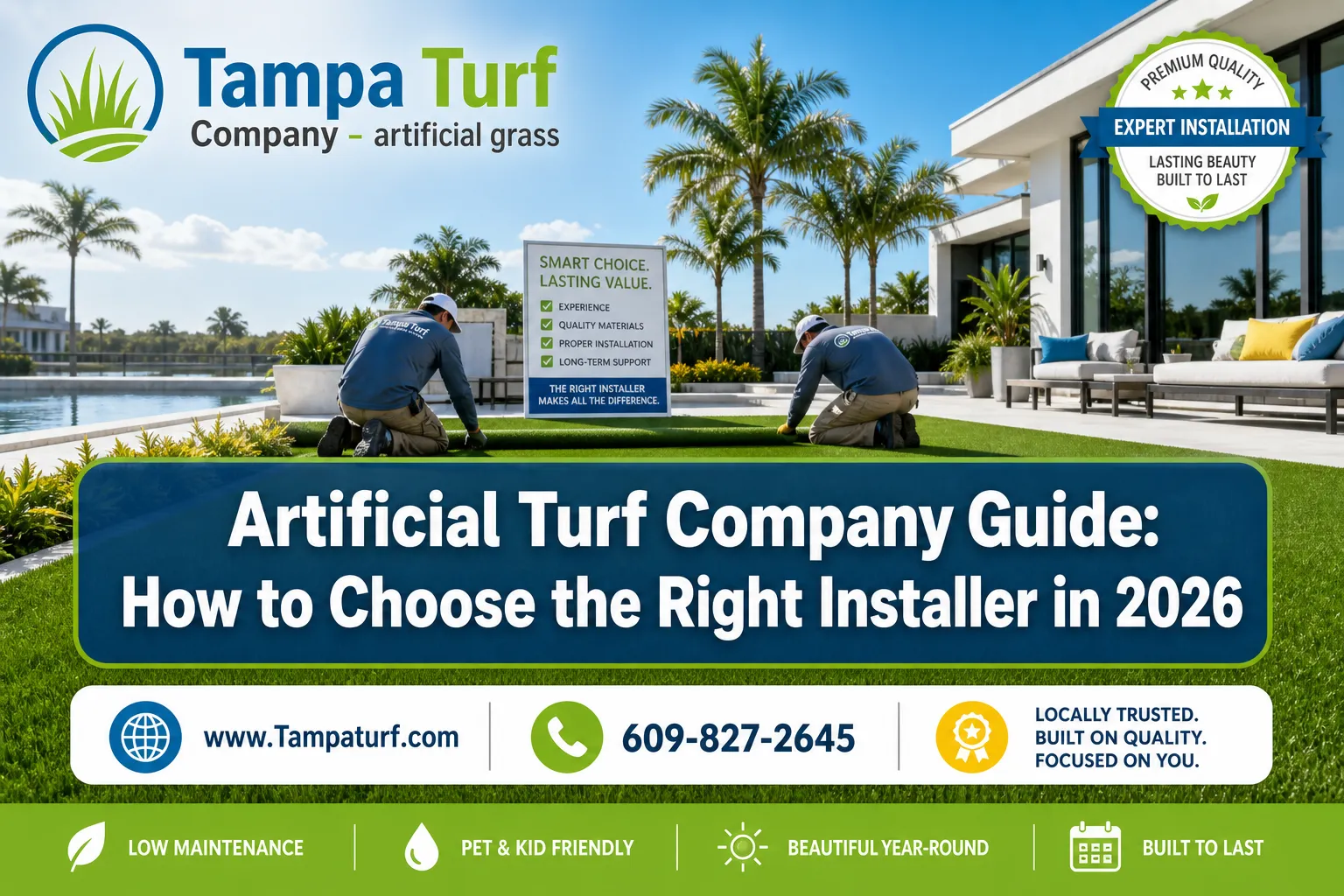
What Should I Look for in the Best Artificial Grass Company Near Me?
The best artificial grass company near you is the one that will show you finished work in your own climate, quote the base spec in writing, and employ its own installation crews rather than subcontracting to whoever is available that week.
Use this checklist when you interview an artificial turf installation company:
- Local, drive-by references from 3+ years ago. New installs always look good. Ask for older ones.
- In-house installers. Subcontracted crews rotate; workmanship consistency drops.
- Written base specification. Aggregate type, depth in inches, compaction target, and whether a bender board or nailer edge is used.
- Two warranties, clearly separated. The manufacturer covers the fibers. The installer covers labor, seams, and settling. Both should be on paper.
- Turf samples you can handle in sunlight. Bend the blades, look at stitch density, feel the backing.
- Licensing, insurance, and a physical address. Ask for a certificate of insurance naming you.
- Clear scope on what’s removed and hauled away. Sod removal and dump fees are real costs that some quotes quietly exclude.
“A quote that doesn’t state base depth isn’t a quote. It’s a guess with a dollar sign in front of it.”
For Florida homeowners, heat, sandy soils, and heavy summer rain all change the install spec. That’s why we recommend working with a specialist in artificial turf Tampa rather than a general landscaper who installs turf occasionally. Tampa Turf has focused on synthetic turf Tampa projects for more than 15 years, and you can see the reasoning behind that specialization on our page explaining why homeowners choose Tampa Turf as their artificial grass company.
Common mistake: choosing on price per square foot of turf alone. Two bids can differ by $3/sq ft entirely because one includes 3 inches of compacted base and the other includes one.
How Much Does Artificial Grass Cost Per Square Foot?
Installed artificial grass generally costs $8 to $20 per square foot in the U.S., with most standard residential lawns landing between $10 and $15. Turf material is usually only $2.50 to $7 of that; the rest is demolition, base, infill, and labor.
Here’s a realistic breakdown of where the money goes:
| Cost component | Typical share of total | What drives it up |
|---|---|---|
| Turf material | 25-40% | Higher face weight, nylon fibers, longer pile |
| Excavation and sod removal | 10-20% | Tree roots, existing concrete, dump fees |
| Base aggregate and compaction | 15-25% | Depth required, poor drainage, access issues |
| Infill | 5-10% | Antimicrobial coated infill for pets |
| Labor, seaming, edging, nails | 20-30% | Complex shapes, many seams, slopes |
Factors that raise your per-square-foot price:
- Small or oddly shaped areas (under ~300 sq ft) cost more per foot because setup and waste are fixed.
- Poor access. Wheelbarrowing base rock through a narrow gate adds hours.
- Pet installations with coated infill and drainage layers.
- Putting greens and sports fields, which need laser-level tolerances and different fiber types.
Decision rule: choose the higher bid if it specifies deeper compacted base, a documented compaction target, and in-house crews. Choose the lower bid only when the base spec matches and the difference is genuinely turf grade you don’t need.
Is Artificial Grass Worth the Money?
Artificial grass is worth the money when your annual lawn spending is high, your water is expensive or restricted, or the space simply won’t grow grass. It’s usually not worth it if you have a large, healthy, low-cost lawn you enjoy maintaining.
The math is straightforward. Add up what you spend yearly on mowing service, water, fertilizer, pest control, reseeding, and equipment. Divide your installed turf cost by that number to get a rough payback period. Many homeowners in hot, dry, or water-restricted regions reach break-even in the 6 to 12 year range, and the turf lasts longer than that.
Artificial grass is a strong fit if you:
- Pay for weekly lawn service
- Live under watering restrictions or on well water
- Have dogs that destroy grass in the same spots
- Have deep shade, heavy root competition, or a slope that won’t hold sod
- Want a pool surround with no mud, clippings, or bare patches
- Own a rental, commercial property, or HOA common area where consistency matters
It’s a weaker fit if you: want a large sports-scale field on a tight budget, plan to sell within a year or two, or place a high personal value on the smell and feel of real grass.
Artificial Grass vs Real Grass: Pros and Cons
Artificial grass wins on water use, consistency, and time. Real grass wins on upfront cost, surface temperature, and natural cooling. Which one is right depends mostly on your climate and how much you actually use the lawn.
| Factor | Artificial grass | Real grass |
|---|---|---|
| Upfront cost | High | Low |
| Ongoing cost | Very low (rinsing, brushing) | Ongoing (water, mowing, chemicals) |
| Water use | Essentially none | Substantial, especially in summer |
| Appearance | Consistent year-round | Seasonal, weather-dependent |
| Surface temperature | Hotter in direct sun | Cooler |
| Pet durability | Excellent, no dead spots | Poor in high-traffic urine areas |
| Drainage | Excellent if base is right | Varies with soil |
| Lifespan | 15-25 years, then replacement | Indefinite with care |
| Repairability | Patching is possible but visible | Reseeds and self-repairs |
| Allergens and pests | Fewer pollen sources, no grubs | Pollen, insects, weeds |
Edge case worth naming: turf gets hot. In full Florida summer sun, synthetic surfaces can feel significantly warmer than shaded natural grass. Lighter-colored infill, cooling-technology fibers, and shade sails all help, and a quick hose-down drops surface temperature fast. If a barefoot-at-noon lawn is your priority, plan for shade.
What Is the Artificial Grass Installation Process and Timeline?
A typical residential install takes 2 to 4 days on site for a standard backyard, plus 1 to 3 weeks of lead time for measuring, turf ordering, and scheduling. Larger yards, sports fields, and commercial projects run longer.
Here’s the sequence a professional turf company Tampa crew follows:
- Site visit and measurement. Roll direction is planned to minimize seams and align blade sweep.
- Excavation. Existing sod and 2 to 4 inches of soil are removed and hauled off.
- Edging and utilities check. Sprinkler heads capped, bender board or nailer edge installed.
- Base placement. Crushed aggregate spread in lifts, graded for slope and drainage.
- Compaction. Plate compactor or roller, watered as needed, to a firm, uniform surface.
- Weed barrier (site-dependent) laid over the compacted base.
- Turf layout and relaxation. Rolls are set out and allowed to acclimate so wrinkles release.
- Cutting and seaming. Seams glued or stitched, edges trimmed tight to hardscape.
- Fastening. Nails or staples every few inches around perimeter and along seams.
- Infill and brushing. Infill spread and power-broomed in so blades stand up.
- Walkthrough. You inspect seams, edges, drainage, and blade direction before final payment.
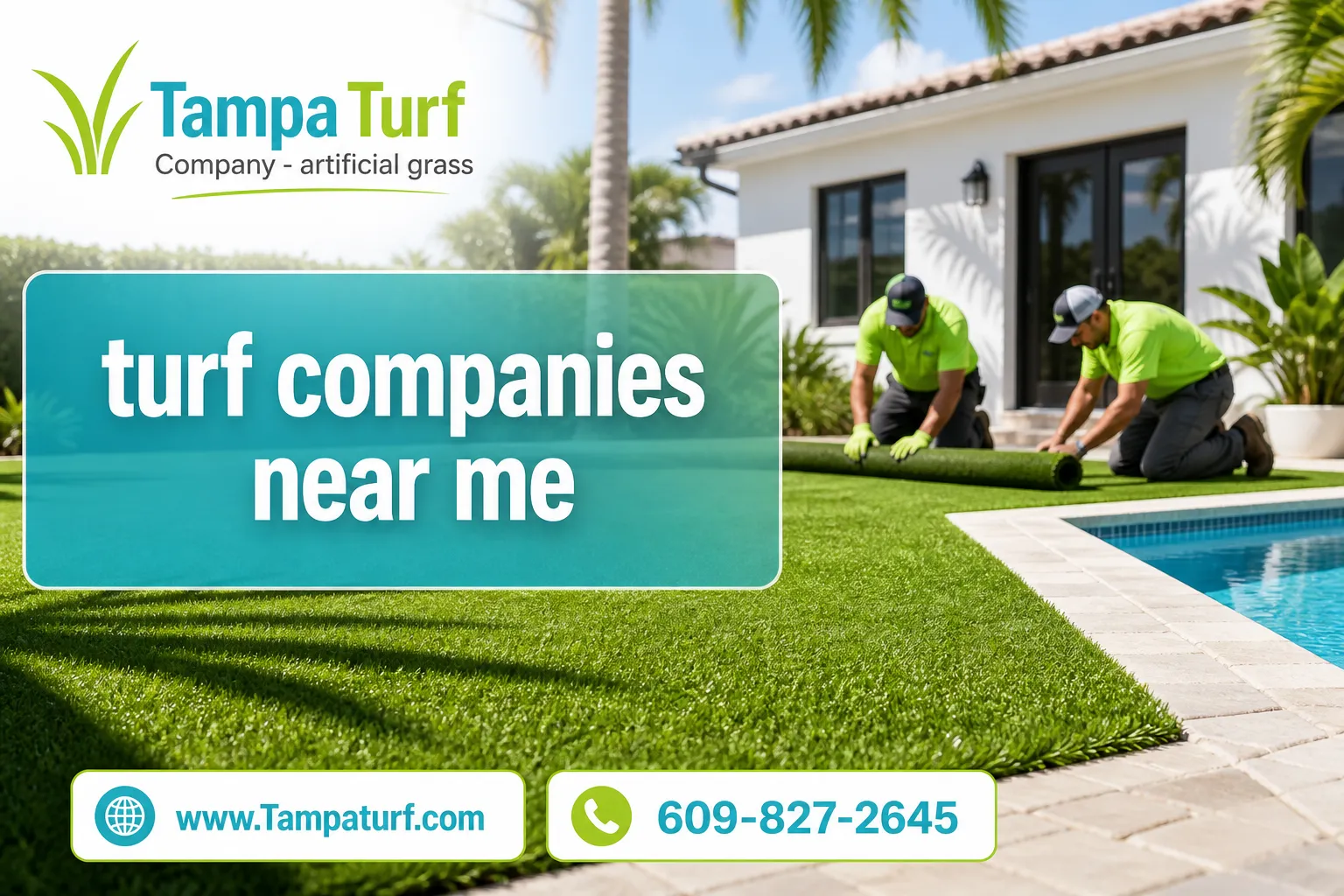
Common mistake: rushing steps 5 and 7. Under-compacted base causes ripples within a year, and turf that wasn’t allowed to relax in the sun holds creases permanently. Our expert installers build in that acclimation time, and the crews work fast and efficiently precisely because the sequence never gets skipped. To schedule a measurement, contact the Tampa Turf company.
 |)
|)
Can You Install Artificial Grass Yourself?
Yes, DIY artificial grass is realistic for small, flat, contained areas: balconies, patios, dog runs, terraces, and side yards under roughly 200 square feet. Full lawns are a different job, mostly because of base preparation.
DIY makes sense when:
- The surface is already hard (concrete, wood deck, pavers), so no excavation is needed
- The area is one rectangle with zero or one seam
- You can rent a plate compactor if base work is required
- Small imperfections won’t bother you
Hire a professional artificial grass company when:
- The area exceeds ~300 sq ft or has curves and multiple seams
- You need excavation, soil disposal, and grading for drainage
- The lawn is for pets, kids, or sports and needs consistent infill depth
- The install ties into pool coping, pavers, or a putting green
- The manufacturer warranty requires certified installation (many do)
Where DIY installs typically fail: visible seams, blade direction mismatch between rolls, low spots that puddle, and edges that lift because they weren’t fastened into a solid edge. Turf material alone often runs $2.50 to $7 per square foot, so a DIY lawn that has to be redone rarely saves money.
How Long Does Artificial Grass Last, and Why Does It Turn Brown or Fade?
Quality artificial grass lasts 15 to 25 years in residential use and 8 to 15 years in heavy-traffic sports or commercial settings. Fading and browning usually come from UV exposure combined with reflected heat, chemical spills, or low-grade fibers, not ordinary foot traffic.
What shortens turf life:
- Intense, continuous sun without adequate UV stabilizers in the yarn
- Reflected heat from windows, glass railings, and light-colored stucco walls, which can scorch or melt fibers in a concentrated stripe
- Grills, fire pits, cigarettes, and fireworks (heat damage is permanent and not covered by warranty)
- Harsh chemicals: bleach, pool shock, motor oil, insecticides, some driveway sealers
- Matting from crushed infill, which reads as “worn out” but is often fixable
How to prevent and troubleshoot discoloration:
| Symptom | Likely cause | Fix |
|---|---|---|
| Uniform light fading after many years | Normal UV aging | Expected; replacement eventually |
| Melted or brown stripe near a window | Reflected/magnified sunlight | Add screen, awning, or window film |
| Flat, dull, matted areas in walk paths | Crushed fibers, low infill | Power broom and top up infill |
| Bleached patch with a hard edge | Chemical spill | Rinse thoroughly; patch if permanent |
| Yellow-green tint in one section | Mismatched dye lot | Prevention only: insist on same lot for a project |
Decision rule: if the blades stand back up after brushing, you have a maintenance issue. If the fibers are shiny, brittle, or fused, that’s heat damage and needs a patch.
Is Artificial Grass Safe for Dogs and Pets?
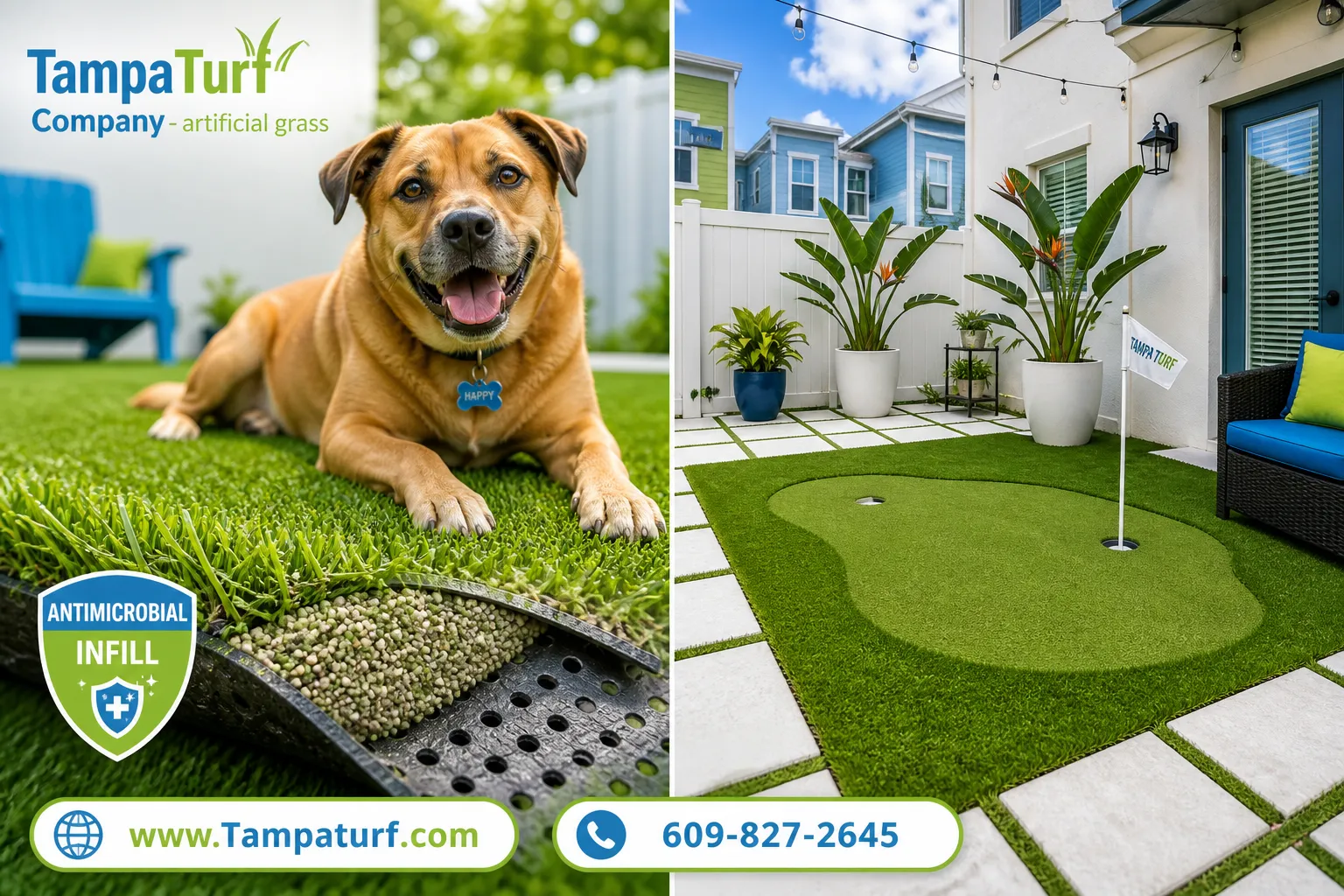
Artificial grass is safe for dogs when it’s installed as a pet system: permeable backing with adequate drainage holes, a free-draining base, and antimicrobial or odor-controlling infill. The turf itself doesn’t attract fleas, doesn’t hold urine if drainage is right, and eliminates the muddy paw problem entirely.
What a proper pet turf install includes:
- Fully permeable backing with a high drainage rate
- Deeper aggregate base so liquid moves down and away instead of sideways
- Coated antimicrobial infill (zeolite or similar) that captures ammonia
- Shorter, denser pile that’s easier to rinse and harder to dig up
- Secure edges, since determined diggers target perimeters
Routine pet care is simple: pick up solids daily, rinse the area weekly (more often in hot weather), and use an enzyme-based turf cleaner monthly. Skip bleach and skip pressure washers on a close setting, since both damage fibers.
Edge case: male dogs that mark the same vertical spot repeatedly (fence post, wall corner) will concentrate ammonia there. Rinse that specific area more often, or add a designated marking post over a small gravel drain.
Tampa Turf builds dedicated pet systems rather than just laying standard lawn turf for dog owners. You can review specs and options for pet turf in Tampa, and the same drainage-first approach carries into our residential turf installations across Tampa.
What Are the Best Artificial Grass Maintenance and Cleaning Tips?
Artificial grass maintenance takes roughly 10 to 20 minutes a month for an average yard. The three things that matter most are brushing the fibers upright, keeping debris off the surface, and maintaining infill depth.
Monthly routine:
- Cross-brush high-traffic paths with a stiff synthetic-bristle broom (never wire)
- Blow or rake off leaves, seed pods, and pine needles before they compost into the infill
- Rinse pet areas and any spill zones
Twice-yearly routine:
- Power broom the whole lawn to lift fibers and redistribute infill
- Check and top up infill in walkways, pet zones, and gate entries
- Inspect seams and perimeter fasteners
- Spot-treat any weeds sprouting at edges (weeds grow in, not through, a good install)
Do not:
- Use a pressure washer at close range or high pressure
- Pour bleach, solvents, or petroleum products on the turf
- Place a grill, fire pit, or space heater directly on the surface
- Park vehicles or heavy equipment on turf not rated for it
- Drag metal furniture across the fibers
Quick example: a Tampa homeowner whose yard sits under an oak drops from “low maintenance” to “monthly leaf blowing” simply because organic debris breaks down into the infill and lets weed seeds germinate. Fifteen minutes with a blower solves it.
Does Artificial Grass Work for Small Spaces, Balconies, and Apartments?
Artificial grass is one of the best surfaces for balconies, rooftops, courtyards, and small patios, and these are the projects most likely to be DIY-friendly. The key requirement is that water must still reach the existing drain.
Guidance for small-space installs:
- Measure the drain path first. Never block a balcony scupper or deck drain. Turf should be permeable and, ideally, laid over a drainage mat on solid surfaces.
- Use shorter pile (about 1 to 1.5 inches). It stays upright in tight areas and looks proportionate.
- Don’t glue to a rental surface. Use loose-lay with double-sided tape at edges or a snap-together tile system you can remove.
- Skip infill on hard-surface installs unless the manufacturer requires it. Non-infill turf is cleaner indoors and on balconies.
- Check HOA and lease rules. Many buildings allow turf but restrict adhesives and any change to drainage.
- Lift it periodically. On a balcony, pull the turf up once or twice a year to clean the slab underneath and prevent staining.
Small-space turf also works well for pet relief areas, play corners, indoor gyms, event patios, and rooftop lounges. For inspiration on lifestyle-focused applications, see our overview of lifestyle turf projects near Tampa.
What Does an Artificial Grass Warranty Actually Cover?
Artificial grass warranties come in two separate parts, and buyers routinely confuse them. The manufacturer warranty (commonly 8 to 15 years) covers the product: excessive fading beyond a stated threshold, fiber loss, and backing or seam failure caused by manufacturing defects. The installer warranty covers workmanship: seams, edges, settling, and drainage performance, and it’s usually 1 to 5 years.
Typically covered:
- Fading beyond the manufacturer’s stated tolerance under normal UV exposure
- Fiber breakdown or delamination from the backing
- Manufacturing defects in the roll
- Seam separation, lifting edges, and visible settling within the workmanship period (from the installer)
Typically excluded:
- Heat damage from grills, fire pits, cigarettes, fireworks, or reflected sunlight
- Chemical or petroleum damage
- Vandalism, animal digging, vehicle traffic
- Normal matting in high-traffic areas
- Damage from improper installation, which is exactly why many manufacturers void coverage on DIY jobs
Questions to ask before signing:
- Is the warranty prorated or full replacement?
- Is it transferable if I sell the house?
- Does labor get covered on a valid claim, or only material?
- What’s the documented fading threshold?
- Who handles the claim, you or the factory?
Alongside factory coverage, our projects carry the Tampa Turf Quality Guaranteed Seal, our own commitment that the workmanship, base construction, and finish meet the standard we’d want in our own yards. Quality of work is the whole point of that seal, not the marketing.
What Is the Environmental Impact of Artificial Grass?
Artificial grass has real environmental trade-offs. It eliminates irrigation, mowing emissions, fertilizer, and pesticide runoff, but it’s made from plastic, it’s harder to recycle than most materials, and it doesn’t support soil life or pollinators.
Environmental advantages:
- No irrigation, which matters enormously in drought and water-restricted regions
- No gas mower or trimmer emissions
- No fertilizer or pesticide runoff into storm drains
- Long service life (15-25 years) spreads manufacturing impact over a long period
Environmental drawbacks:
- Petroleum-based fibers and backing
- End-of-life recycling infrastructure is still limited in most regions
- Reduced habitat for insects and soil organisms
- Higher surface temperature contributes to local heat retention
- Crumb rubber infill in particular has faced ongoing scrutiny
How to reduce the footprint of a turf project:
- Choose sand, coated sand, or organic infill instead of crumb rubber
- Ask your installer about takeback or recycling programs for old turf
- Keep tree canopy and planting beds; turf the lawn, not the entire yard
- Pick a longer-lasting, higher-grade product so you replace it once, not twice
- Combine turf with permeable hardscape and native shade plants
Decision rule: if your alternative is a thirsty, chemically maintained lawn in a hot, dry climate, turf usually reduces total impact. If your alternative is a native, unirrigated, low-mow landscape, that native option is the greener choice.
Why Tampa Turf Is the #1 Artificial Turf Company in Tampa Bay
For Tampa Bay homeowners and businesses, Tampa Turf is the artificial turf company built specifically around Florida conditions: sandy soils, driving summer rain, salt air, and relentless UV. Over 15 years of focused experience in artificial turf Tampa Florida installations means our crews have already solved the drainage and heat problems that catch general contractors off guard.
What we install:
- Home and backyard turf, including back yard artificial grass for shaded or root-heavy lots
- Pool turf that stays clean, mud-free, and cool underfoot around decks and coping
- Pet turf with antimicrobial infill and drainage-first base systems
- Putting greens and low-pile practice surfaces
- Sports turf for high school, college, soccer, and football club fields, built for cleat traction and consistent ball roll
- Commercial turf for schools, campuses, sports arenas, retail frontages, and professional sports applications
Our expert installers are in-house, not subcontracted, which is why the workmanship stays consistent from the first yard we did to the one we finish this week. Every project is fast, efficient, and closed out with a walkthrough before final payment, and every project carries the Tampa Turf Quality Guaranteed Seal.
If you’re comparing turf companies near me searches and trying to sort marketing from craftsmanship, start with our story and credentials on the About Tampa Turf company page, then request a free on-site measurement for artificial turf tampa fl.
Frequently Asked Questions
How much does artificial grass cost per square foot installed?
Most U.S. installations run $8 to $20 per square foot fully installed, with typical residential lawns landing between $10 and $15. Turf material is usually only about a third of that; base preparation and labor make up the rest.
How long does artificial grass last?
Residential artificial grass typically lasts 15 to 25 years. Heavy-traffic sports and commercial fields usually reach 8 to 15 years before the fibers need replacement.
Can artificial grass be installed over concrete?
Yes. Concrete installs need a drainage mat or shock pad, confirmed water flow to an existing drain, and edge adhesive or tape. Because there’s no excavation, these projects are among the fastest to complete.
Does artificial grass get too hot to walk on?
Synthetic turf runs hotter than natural grass in direct sun. A short hose-down cools it quickly, and shade, lighter infill, and cooling-technology fibers all reduce peak surface temperature.
Will artificial grass smell if I have dogs?
Not with the right system. Permeable backing, a free-draining base, antimicrobial infill, and a weekly rinse control odor. Smell almost always traces back to drainage that was built too shallow.
Do weeds grow through artificial grass?
Weeds don’t grow through quality turf with a proper base and weed barrier, but they can sprout on top when organic debris collects in the infill. Regular blowing or raking prevents it.
Can artificial grass be repaired if it’s damaged?
Yes. A damaged section can be cut out and patched with matching turf, though the patch may be slightly visible. Keeping leftover scrap from the same dye lot makes repairs blend far better.
Does artificial grass increase home value?
It can improve curb appeal and remove a maintenance burden, which many buyers value in hot or water-restricted markets. Appraisal impact varies by region and by how well the installation was executed.
Is DIY artificial grass installation a good idea?
DIY works well on balconies, patios, and small flat areas under about 200 square feet. Full lawns need excavation, plate compaction, and seaming skill, and many manufacturer warranties require professional installation.
How often does artificial grass need maintenance?
Plan on 10 to 20 minutes a month of brushing and debris removal, plus a twice-yearly power brooming and infill top-up. Pet areas need weekly rinsing.
What’s the best infill for a family with kids and pets?
Coated silica sand or zeolite-based antimicrobial infill is the common recommendation, since both control odor and avoid the concerns associated with crumb rubber.
How long does an artificial grass installation take?
A standard residential backyard takes 2 to 4 days on site, after 1 to 3 weeks of measuring, ordering, and scheduling. Sports fields and large commercial projects take longer.
Conclusion: Your Next Steps
The difference between a synthetic lawn that looks flawless for 20 years and one that ripples in year two comes down to decisions made before the first roll is unwrapped. Base depth, compaction, drainage, infill choice, and seam craftsmanship matter more than the brochure name on the turf.
Here’s how I’d move forward:
- Measure your area and note sun exposure, slope, drainage problem spots, and pet or kid traffic patterns.
- Add up your current lawn costs for a year so you can judge payback honestly.
- Get three written quotes that each state aggregate type, base depth, compaction, infill product, and what’s hauled away.
- Compare base specs before prices. Then compare turf face weight and warranty terms.
- Drive by two older installs from each finalist, ideally three or more years old.
- Confirm both warranties in writing, manufacturer and workmanship, including whether labor is covered.
- Schedule the install for a drier stretch if you’re in a rainy season, and plan to be home for the final walkthrough.
If you’re in the greater Tampa Bay area, we’d welcome the chance to walk your property, show you samples in real Florida sunlight, and give you a spec-by-spec quote you can compare against anyone else’s. Fifteen-plus years, in-house expert installers, and the Tampa Turf Quality Guaranteed Seal on every square foot.